Clinic Signs in Toronto and York Region: A Practical Setup Guide
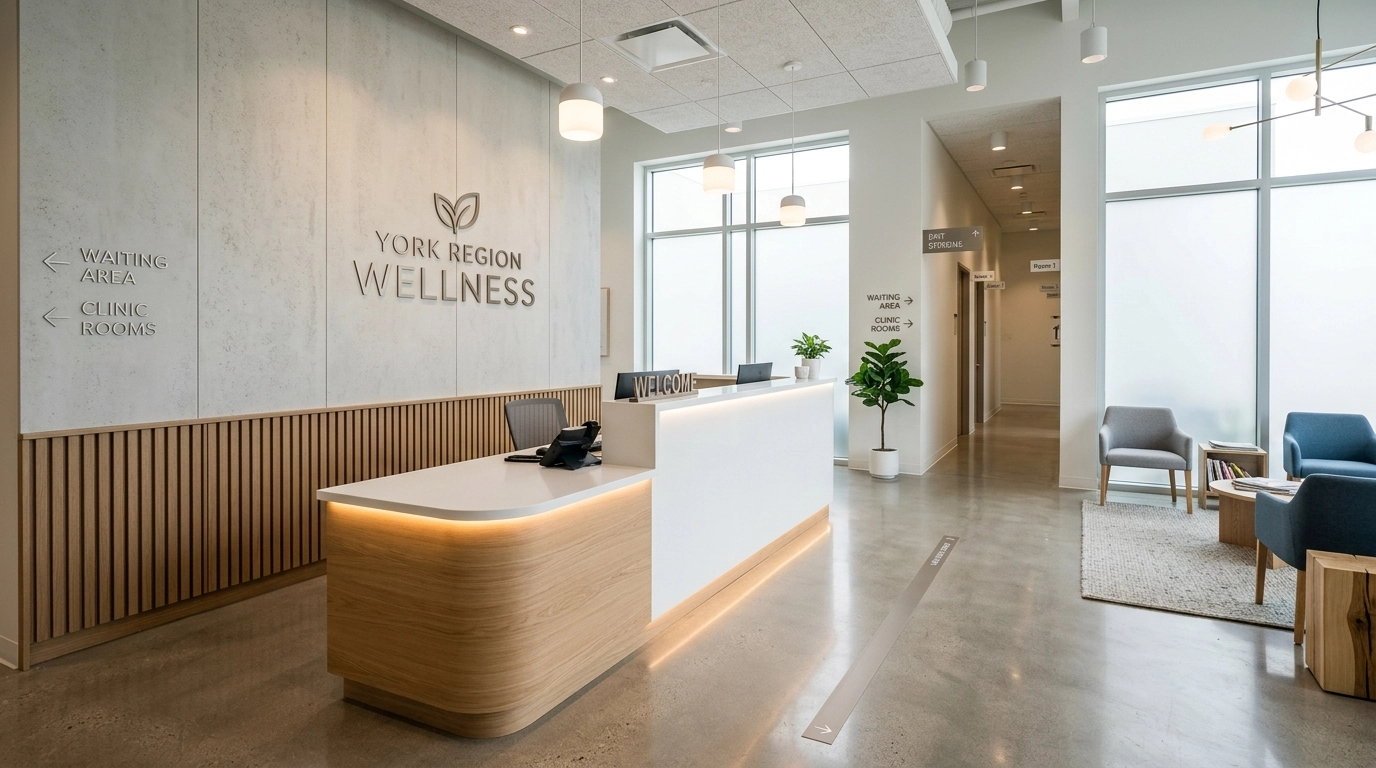

Opening a new clinic in Toronto or York Region comes with enough moving parts already. You are juggling permits, contractors, equipment, staff, inspections, and opening deadlines in places like Toronto, Markham, Vaughan, and Richmond Hill. Signage usually gets pushed to the end.
That is where clinics get into trouble. If patients cannot find your unit, cannot tell they are in the right place, or stop in the corridor because the next step is not Clear, your signage is already hurting your First impression, Visibility, and Customer experience.
Treat signage as part of the build-out, not a finishing touch. Plan it early, tie it to the floor plan, and get the essentials in place before opening week.
1. Clinic signs in Toronto and York Region start outside
In Toronto, Markham, Vaughan, and Richmond Hill, your storefront sign is your first job of communication. If a patient drives past once, circles the plaza, or calls because they cannot spot the unit, that is a real operating problem.
Exterior signage is not just your name on the building. It needs to be Clear, readable, and approved.
- Main storefront sign: Use a high-contrast sign that reads from the road and from the plaza entrance. Channel letters, illuminated fascia signs, and clean panel signs are common depending on the building.
- Window graphics: Add your hours, website, phone number, and a short list of services. This helps patients confirm they are in the right place before they open the door.
- A-frame or sidewalk signs: If your clinic is at grade and local rules allow it, this can help with walk-in traffic and “Now Open” Visibility.
Before production, check landlord rules and municipal requirements. In many GTA plazas, landlord approval comes first, and some sites also require a sign permit before installation. That affects your opening date. Handle drawings and approvals early, not after the walls are painted.
If you are still at lease or renovation stage, get your exterior sign plan priced early so permits and production do not slow down your opening.
2. Reception signs need the right scale and lighting
The moment a patient walks in, they want quick confirmation that they are in the right clinic. That is why the reception sign matters. Focus on what works in a real healthcare space: durable materials, easy cleaning, proper scale, and a clean sightline from the entry.
- Acrylic with stand-offs: Works well behind a reception desk or on a painted feature wall.
- Backlit LED signs: A strong option for clinics with limited natural light or a deeper waiting area.
- PVC or metal letters: Good for minimalist interiors where you want the branding to feel built in.
Common mistake: the logo looks fine on paper, then gets installed too small on a wide wall. From the front door, it disappears. Another one: a nice logo sign gets mounted in a dim waiting area with no thought to lighting, so the First impression falls flat. Size and lighting need to be planned together.
A typical layout example: a patient walks in from a plaza entrance, turns slightly right, and sees the front desk straight ahead. In that setup, the logo sign should be readable from the entry, while a second small directional sign near the door can point to check-in, washroom, or accessible route if needed.
If your reception wall is already framed or your millworker has started, confirm sign size, materials, and mounting method now, before production begins.

3. Wayfinding signs for a better customer experience
Nothing frustrates a patient faster than checking in and then not knowing where to go. Good wayfinding reduces hesitation, repeated questions at reception, and traffic jams in narrow corridors.
Your navigation strategy should include:
- Directional wall signs: Place these at every decision point, such as the split between treatment rooms and admin offices, or where a main corridor turns toward imaging, consult rooms, or washrooms.
- Room identification: Every exam room, consult room, lab, washroom, and staff-only area should be labeled consistently.
- "You are here" maps: Useful for larger clinics, second-floor medical offices, or shared professional buildings where patients step out of an elevator and need quick orientation.
Common mistake: clinics add signs only at doorways and ignore the flow between spaces. Patients make decisions at corners, corridor splits, elevator lobbies, and entries, not just at the final room. Another mistake is undersized room ID signs. If a patient has to stop at each door and lean in to read Room 3 versus Room 5, the system is not working.
Real-world layout example: in a long clinic plan with reception at the front, treatment rooms down one side, and staff areas at the back, you usually need one directional sign near check-in, one midway down the hall, and Clear room IDs on every door. In a multi-tenant medical building, you may also need a suite ID at the entrance and a directory element in the lobby.
Practical wayfinding is about solving “where do I go next?” before the patient asks.
Ready to pressure-test your layout before signs go into production? Contact Visual99 for a clinic walkthrough or floor plan review.
If your clinic layout already exists in floor plans, use that now. A simple sign location review before production will save you from patching walls and reprinting panels later.
4. Frosted privacy film for exam rooms and offices
In a clinic, privacy is not optional. At the same time, many newer layouts across Toronto and York Region use glass doors, sidelites, and glazed office fronts to keep the space open and bright. That is where privacy film becomes a Practical part of the sign package.
Frosted privacy film is a practical choice for:
- Exam room doors: Block direct sightlines from the hallway while keeping light in the corridor.
- Consultation offices: Add privacy for sensitive conversations without fully closing off the room.
- Street-facing windows: Stop direct views into treatment or waiting areas where that exposure feels uncomfortable.
Real-world layout example: if your exam rooms line one side of a central corridor with narrow glass door panels, a consistent frost band across each panel keeps the hallway clean while giving patients more privacy. If your consult office sits beside reception with a full glass wall, partial frosting can maintain openness while reducing visual exposure.
You can customize this film with subtle patterns or branding, but keep the goal Practical: privacy, consistency, and a finished look.
If your glazing is already measured or ordered, plan the privacy film at the same time so installation can happen cleanly before opening.

5. Regulatory and accessibility signage
In Ontario, your clinic needs to meet accessibility requirements under the AODA. Do not leave this to the end. Build it into the sign scope from the start, especially if you are opening a medical, dental, physio, rehab, or wellness clinic.
- Braille and tactile signs: Commonly required for washrooms, exits, and permanent room identification. Mounting height and placement matter.
- High contrast: Keep text and background easy to read for patients with low vision.
- Exit and emergency signs: Make sure these are visible, compliant, and coordinated with the rest of the space.
This is where production details matter. Tactile signs are not a last-minute vinyl decal job. They need correct fabrication, spacing, and installation. If you leave them until the final week before opening, you can delay occupancy sign-off or end up with temporary fixes that look rushed.
If you are pricing signs now, include your accessibility package in the same scope so you are not scrambling for compliant room signs at the end.
6. Safety and instructional graphics
Most new clinics have operating rules that patients and staff need to understand quickly. Do not wait until opening day and tape paper notices to doors. It looks rushed and weakens the First impression right away.
- Hand washing stations: Add clean, durable signs near sinks and treatment zones.
- Authorized personnel only: Mark staff rooms, storage, utility rooms, and back-of-house corridors clearly.
- No smoking/vaping signs: Required at entrances and easy to include as part of your full package.
Real-world layout example: if your clinic has a staff corridor behind treatment rooms, mark that transition clearly so patients do not drift into supply or sterilization areas. If you have one public washroom near reception and one staff washroom at the rear, label both clearly to avoid confusion.
Bundle these smaller signs into the main production run. It is more efficient, more consistent, and usually faster than adding them one by one after install.
Why clarity matters for your new clinic
We talk to clinic owners all the time who realize too late that the sign permit was not started, the reception wall was not measured properly, or the patient flow was never considered on the floor plan. Then opening gets tighter, temporary signs go up, and the space feels unfinished.
At Visual99, we focus on the visual layer of your clinic so patients can understand the space quickly and confidently. That means signage that is Clear, Practical, and built around real use: exterior Visibility, reception branding, privacy film, room IDs, accessibility signs, and navigation that actually works.
If you are opening a clinic in Toronto, York Region, or across the GTA, handle signage early enough to cover permits, production, and installation properly.
Contact Visual99 to book a clinic walkthrough or floor plan review.
Have A Project In Mind?
Tell us the scope, approximate dimensions, and your timeline. We typically respond within two business days.
Discuss Your Project